
Introduction to Apache Spark
Apache Spark is a big data open source data processing framework. Built on the premises of being fast and easy to use. This Framework was developed in 2009 at the University of Berkeley’s AMPLab and since 2010 was released under the tutelage of the Apache organization. It is the direct competition of Hadoop but far from wanting to replace it, it integrates very well with the Hadoop ecosystem. But Apache Spark has several advantages compared to another Map-Reduce and big data framework.
First of all, Apache Spark offers a consistent way to process data of different natures such as video, text, images and from different sources such as network, online streaming, online web data, etc. At the same time, Spark allows applications to run on Hadoop clusters to run up to 100 times faster in memory and 10 times faster on disk.
Spark allows programming applications in Python, Java or Scala. At the same time it comes with an integrated set of more than 80 high-level operators. And we can use it interactively to query data inside the shell. In addition, the Map and Reduce operations support queries per sql, streaming, machine learning and graph processing. Developers can use these capabilities alone or combine them to run on a single information.
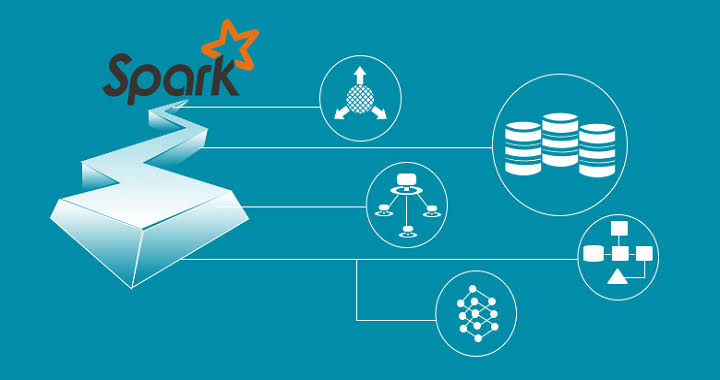
Apache Spark Features:
The below are the features of Apache spark listed by Apache Spark Training in Bangalore are,
- Spark improves MapReduce with less data processing costs.
- With capabilities such as memory data storage and near real-time processing, it can run several times faster than other big data technologies.
- Spark supports in evaluation of big-data queries and helps to optimize steps in data processing workflows. To improve developer productivity and a consistent architecture for big-data solutions, it provides a top-level API.
- Spark saves intermediate results in memory instead of writing them to disk, which is efficient, especially when we have to work on the same data set several times. It is designed to be an execution engine that works in both memory and disk. Spark operators perform external operations when data does not enter memory. Spark can be used to process data sets that exceed the aggregate memory in a cluster.
- Spark will attempt to store as much data in memory as possible and then save it to disk. You can store part of a set of data in memory and the remaining data on the disk. With this data storage in memory then on disk, Spark gets the performance advantage.
Other features include:
- Supports more than map functions and reduces
- The API supports Scala, Java and Python
- The interactive console supports Scala and Python.
- Spark was written in Scala so it runs in the JVM and currently supports for development: Scala, Java, Python and R.
Do you want to master Big Data technologies and become an End to End Spark Developer, Big Data Analyst? Get trained from Apache Spark Training in Bangalore.
 software courses